From Vision to Development Phase
The priority section connecting Newcastle and Sydney has now entered a two-year Development Phase designed to make the project “construction ready.” This stage focuses on detailed corridor design, environmental assessments, geotechnical investigations and early contractor engagement.
As part of this progression, the Authority has released multiple specialist tenders covering engineering, planning and advisory services. The objective is clear: refine the technical framework, strengthen cost certainty, and position the project for future procurement decisions.
Unlike earlier studies, this phase is structured to establish practical delivery foundations rather than purely conceptual analysis. It marks the transition from high-level feasibility to detailed implementation planning.
Transformational Travel Times
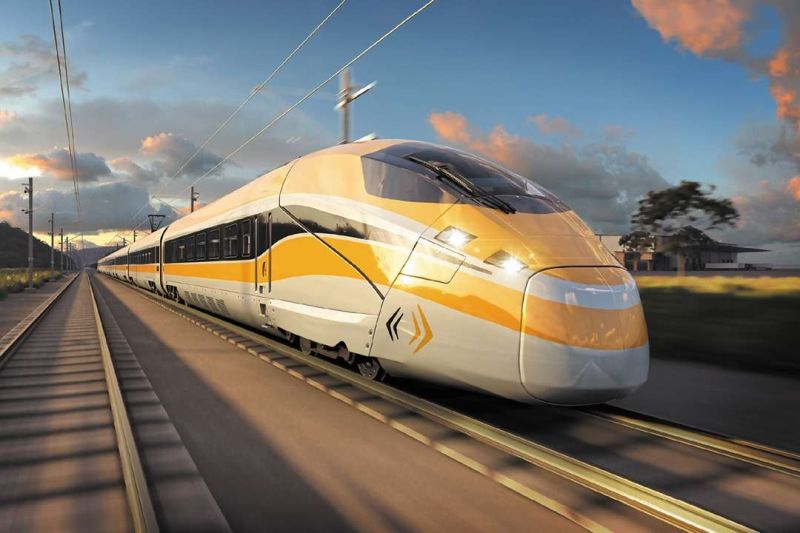
Under current projections, trains on the corridor would operate at speeds of up to 320 km/h, reducing travel time between Newcastle and Sydney to approximately one hour, compared with the existing rail journey of more than 2 hours and 40 minutes.
This compression of travel time is significant. It effectively brings the Hunter Region into a daily commuting radius of Sydney’s CBD while maintaining lifestyle and affordability advantages outside metropolitan Sydney.
Such connectivity has historically reshaped property markets and labour flows in global cities where high-speed rail networks operate successfully.
Economic Impact and Employment Growth
The released business case outlines substantial long-term economic benefits, including:
- Tens of thousands of direct and indirect jobs across planning and construction
- Multi-billion-dollar productivity gains over coming decades
- Increased regional labour mobility
- Stimulus to housing supply and transit-oriented development
Industry bodies including the Australasian Railway Association have publicly supported the initiative, highlighting its potential to modernise east-coast transport infrastructure and strengthen long-term economic resilience.
Importantly, infrastructure of this scale tends to catalyse secondary investment from commercial precincts and mixed-use development to industrial and logistics hubs aligned with improved transport corridors.
Regional Growth and Urban Reshaping
For Newcastle and surrounding regional centres, high-speed rail introduces the possibility of a genuine two-city economic relationship rather than a traditional metropolitan-regional divide.
Improved connectivity may:
- Increase residential demand in lifestyle markets
- Support decentralisation of professional services
- Encourage corporate expansion into lower-cost regional centres
- Accelerate infrastructure upgrades around proposed station precincts
Historically, major transport investments influence land values well in advance of construction commencement particularly once planning clarity and political commitment strengthen.
Fiscal Scrutiny and Community Sentiment
Despite growing momentum, the project remains subject to fiscal and political scrutiny. High-speed rail requires significant capital investment, and public debate continues around cost-benefit metrics, staging and long-term funding mechanisms.
Community sentiment is cautiously optimistic. Previous proposals over several decades did not advance beyond preliminary study phases, leading to understandable scepticism among some stakeholders.
However, the formal establishment of the Authority, allocation of development funding, and structured procurement processes differentiate the current initiative from past iterations.
What Happens Next
Over the next two years, the Development Phase will focus on:
- Corridor protection and land investigations
- Environmental impact assessments
- Engineering refinement
- Industry engagement
- Risk mitigation and cost certainty
At its conclusion, the project is intended to be positioned for final investment decisions and construction procurement.
While timelines for ground-breaking remain subject to future approvals, the present milestone signals that high-speed rail is no longer purely conceptual, it is now operating within a defined delivery framework.
Market Implications
For investors and landholders, infrastructure-led transformation is rarely immediate, but it is often directional.
The Sydney–Newcastle high-speed rail corridor has the potential to:
- Rebalance housing demand between metropolitan and regional markets
- Drive transit-oriented development around future station locations
- Strengthen long-term industrial and commercial viability along the route
- Increase strategic land banking interest in growth precincts
As with previous generational infrastructure projects, clarity is key. With the Development Phase now underway, the market will be watching closely for further definition around alignment, station placement and construction timing.