Western Sydney's Bus Network: The Missing Piece Falls Into Place
Every great city is built on its transport bones. Sydney's metros get the attention, but it's the buses that do the daily work, quietly connecting the communities that rail can't reach, moving shift workers before dawn and families after dark, filling the gaps that more celebrated infrastructure leaves behind.
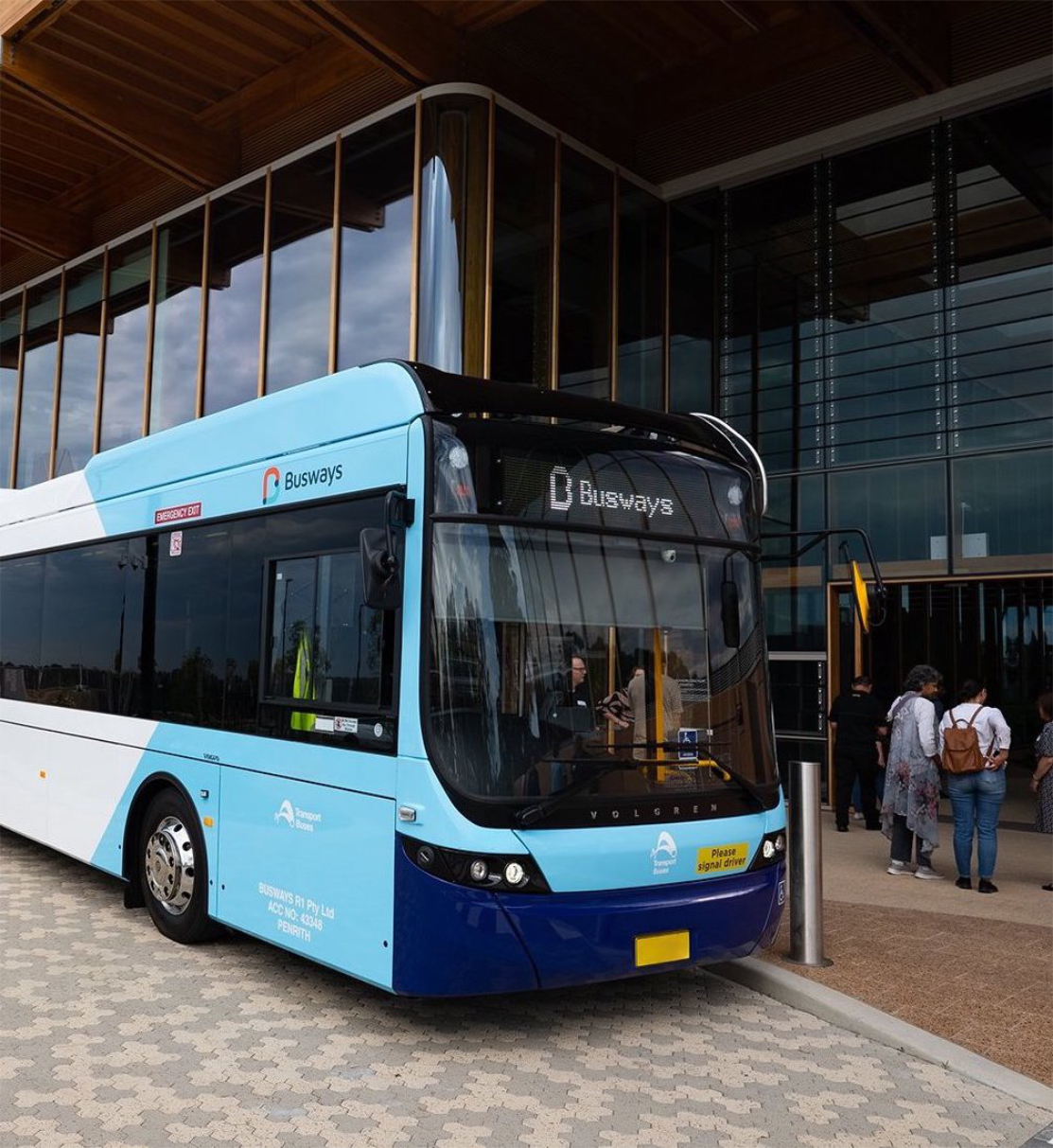
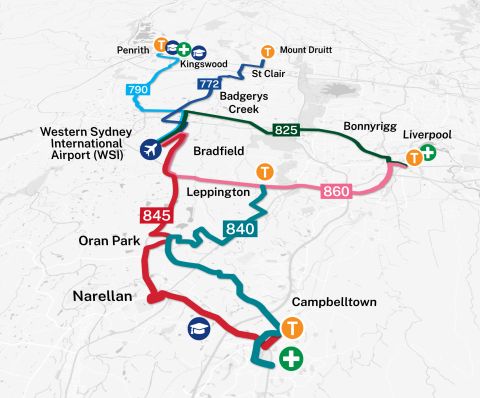
The NSW Government has confirmed that dedicated bus services linking Penrith, Oran Park, Campbelltown, Liverpool, Mount Druitt and Leppington to Western Sydney International Airport will begin in July 2026, timed to align with the airport's opening. Critically, these are not temporary measures introduced to manage an opening period and quietly wound back once the headlines move on. The routes will become part of the permanent transport network, designed to evolve alongside demand as the airport and Aerotropolis mature over the decades ahead. This is a substantive long-term commitment to the region's connectivity, not a short-term operational fix.
For businesses that have been evaluating a presence in the Western Sydney Aerotropolis, the question of workforce accessibility has long been a central and unresolved consideration. The answer is now becoming clear.
Connecting Communities That Have Been Overlooked
The suburbs served by the new network share a common story. They have grown rapidly over the past decade, absorbing hundreds of thousands of new residents drawn by relatively affordable housing and improving amenity. Yet transport investment has consistently lagged behind population growth, leaving many residents dependent on private vehicles for employment access and limiting the effective labour catchment available to businesses in the region.
Direct bus links to the airport change that equation meaningfully. Residents across a wide geographic catchment will be able to access employment in and around the Aerotropolis without relying on a car, which matters not only for individual households but for the long-term viability of the precinct itself. An employment zone that can only be reached by those who own and can afford to run a vehicle is structurally constrained in ways that affect everything from recruitment to retention to the diversity of its workforce.
For businesses operating shift work or non-standard hours as is common across aviation, logistics, cold chain, ground handling and related sectors, the availability of structured, reliable bus services from major residential centres provides a degree of workforce predictability that was previously very difficult to guarantee in this part of Sydney. Knowing that a 4am shift can be filled by workers arriving on public transport rather than depending entirely on private vehicle access changes how operators plan rosters, size their workforce and think about long-term labour strategy.
This is not a marginal consideration. In competitive labour markets, the ability to draw from a broader pool, including workers who don't own vehicles or who prefer not to drive is a genuine operational advantage.
A Multi-Modal Framework Taking Shape
The confirmed bus services complete a multi-modal transport framework that has been assembling around the Aerotropolis over several years. When fully operational, the precinct will be served by road, rail and bus connections that together cover a remarkably wide geographic and demographic range.
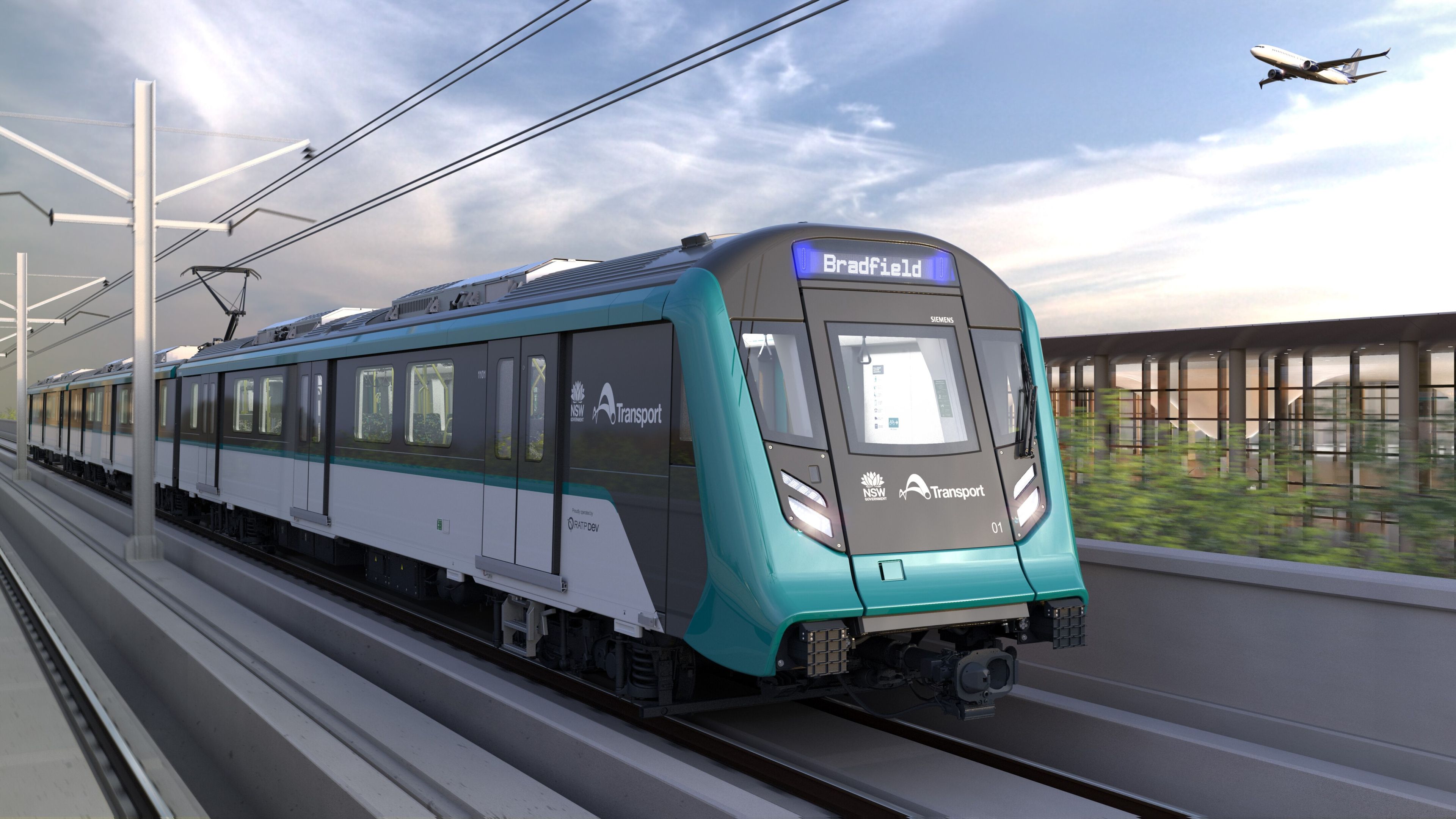
The M7 and M12 motorway corridors provide direct road access from across Sydney's west, connecting the Aerotropolis to the broader metropolitan freight and logistics network as well as to the private vehicle commuter base. Free bus services circulating within the precinct itself will reduce the need for private vehicle movement once workers and visitors arrive, supporting the kind of walkable, transit-oriented environment that Bradfield City is designed to be. The Sydney Metro Western Sydney Airport line, currently under construction, will connect the airport and Bradfield City to the broader metropolitan rail network from 2027, providing a high-frequency, high-capacity spine for commuter movement.
And now, from July 2026, regional bus routes will connect the surrounding residential communities directly into the precinct, filling the geographic gaps that the metro line, by its nature, cannot serve.
Few greenfield employment precincts anywhere in Australia have launched with this breadth of transport investment in place from opening day. The combination positions the Aerotropolis to genuinely compete for the kind of operators who require real workforce catchment, not aspirational access modelling in a planning document, but confirmed, operational services running on timetable.
Bradfield City: A Regional Hub, Not Just a Rail Stop
Bradfield City is taking shape as the urban and commercial heart of the Aerotropolis. Planned as a new city centre adjacent to the airport, it is envisioned to accommodate education, research, healthcare, hospitality, retail and commercial activity within a walkable, mixed-use environment oriented around public transport access.
The risk with transit-oriented development is that it becomes dependent on a single mode that the vision of a vibrant, accessible urban centre quietly narrows to a destination that functions well for those arriving by train and poorly for everyone else. The confirmed bus network addresses that risk directly. Communities in Campbelltown, Liverpool and across the broader catchment will have direct routes into Bradfield, broadening its labour pool and its potential customer base in ways that rail alone could not deliver.
For businesses establishing operations in Bradfield or the surrounding Aerotropolis, this expanded connectivity meaningfully changes the calculus around staffing, site selection and long-term workforce planning. A precinct that can draw workers from Penrith in the northwest, Campbelltown in the south and Liverpool in the east, across a combined population base of well over a million people is a fundamentally different proposition from one accessible only to those who live near a metro station.
What This Means for Property and Investment
Infrastructure confirmation tends to function as a market signal, and experienced investors watch these announcements carefully. When transport commitments move from planning documents and feasibility studies into confirmed service announcements with operational dates, occupier and investor confidence typically follows, because the primary risk attached to emerging precincts is connectivity uncertainty, and that uncertainty is being progressively resolved.
The bus network announcement adds a further layer of certainty to an already strengthening picture. Motorway access is in place. A metro line is under construction with a confirmed opening timeline. Free internal circulation services are planned for the precinct. And now a permanent regional bus network connecting the surrounding residential communities has been confirmed. Taken together, these represent an infrastructure base that removes much of the connectivity risk that previously caused businesses and investors to adopt a wait-and-see posture toward Aerotropolis site decisions.
The practical implications for the property market are several. Leasing demand from operators who had deferred decisions pending transport clarity is likely to strengthen as that clarity arrives. Logistics, cold chain and aviation services occupiers, who require both strong road access and reliable shift-worker connectivity, now have confirmation that both will be available. Residential demand across the catchment communities connected by the bus network is likely to grow as employment access improves. And broader investor appetite for commercial and industrial product within the precinct should increase as the remaining risk factors are progressively resolved in the lead-up to opening.
The businesses and investors that move during the precinct's formative years typically secure the most strategically located sites, negotiate from a position of greater choice, and establish long-term positioning that becomes increasingly difficult to replicate as the precinct matures and competition for prime locations intensifies.
What to Watch Between Now and Opening
The period between now and July 2026 will see a series of further announcements and decisions that will shape the Aerotropolis's initial operating environment. Businesses and investors with active interest in the precinct should be monitoring the finalisation of bus route timetabling and interchange arrangements, which will determine exactly how the regional services integrate with the metro and internal precinct circulation. Further development approvals and land releases in Bradfield City will clarify the commercial and mixed-use opportunities available in the urban core. Progress on metro construction and confirmation of final station configurations will inform precinct planning for operators whose location decisions are sensitive to pedestrian access from rail. And leasing and sales activity across the precinct will begin to accelerate as occupiers move from evaluation to commitment in the months ahead of airport opening.
Each of these developments will add further definition to what is already a compelling and increasingly well-evidenced investment case.
The Window Is Narrowing
The Western Sydney Aerotropolis is no longer a long-range proposition requiring a tolerance for uncertainty. With an airport confirmed to open in 2026, a metro line following in 2027, motorway connections already in place, and now a permanent regional bus network serving the region's largest residential communities confirmed, the precinct is moving decisively from planning concept to operational reality.
The question for businesses and investors is no longer whether the Aerotropolis will be connected. It will be. The question is whether to act while the precinct is still in its formative stage, when site choice is widest, terms are most negotiable, and the opportunity to establish a defining presence in one of Australia's most significant new economic precincts remains fully open.
Bradfield International Real Estate specialises in helping businesses and investors navigate every stage of the Aerotropolis opportunity. From site selection to leasing and sales, our team brings deep market knowledge and transactional expertise to one of the country's most consequential emerging precincts. Contact us to understand how the confirmed infrastructure program affects your site selection, workforce planning and investment strategy in Greater Western Sydney.